

Endurance training is
a game of consistency, balance,
and patience.
The Power of Polarized Training
Polarized training is built around a deliberate balance between easy and hard efforts. Most of your training is done at a calm, controlled intensity, allowing your endurance to grow and your body to adapt optimally.
Alongside this, targeted high-intensity sessions improve your speed, strength, and VO₂max. By training mostly easy and going truly hard only when it matters, you train more effectively, recover better, and continue to make consistent progress — without burning yourself out.
The middle zone — often referred to as Sweet Spot or Tempo — is used less frequently, but remains a valuable training tool that I apply selectively when it fits your level and goals.
Want to know how it works? Read on!
“The 80/20 intensity distribution works like guard rails on a winding road: it protects you from overdoing it, keeps you on track, and helps you make steady progress.”
Dr. Stephen Seiler

Homeostasis: the physiological basis of training
Your body is constantly striving for internal balance: temperature, energy, hormones, and countless other processes prefer to remain stable. Training temporarily disrupts this balance. Muscles become fatigued, energy stores drop, and stress hormones rise.
During recovery, your body works to restore this balance — and goes one step further. It adapts to better handle the next stimulus. This process is called supercompensation, and it’s the reason you become stronger, faster, and more efficient when training and rest are properly balanced.
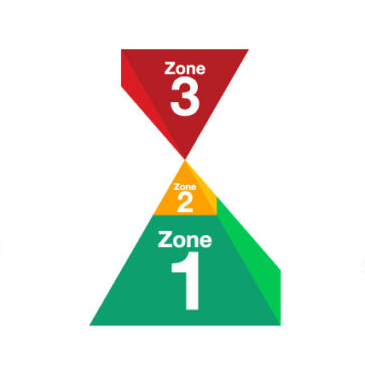
The Polarized Training Model
Unlike many other training models, which use five or more zones, the polarized model is based on three zones:
Zone 1: Below the first lactate threshold (LT1, the point at which the body starts producing lactate)
Zone 2: Between the first and second lactate thresholds (LT1 and LT2)
Zone 3: Above the second lactate threshold (LT2, the point at which the body can no longer clear lactate)
Polarized training deliberately distributes training stimuli to the extremes:
80% Low Intensity (Zone 1)
Long, low-intensity sessions provide an effective training stimulus while keeping the overall load manageable.
Trains the aerobic system, improves fat metabolism, and makes Type I fibers more efficient.
Overall training stress remains low enough to handle harder sessions without overtraining.20% High Intensity (Zone 3)
These sessions provide a powerful, acute stimulus for improvements in VO₂max, anaerobic capacity, and the strength and speed of Type II fibers.
Because they are physiologically demanding, adequate low-intensity days are needed to allow for supercompensation.

Metabolic Energy Systems
During exercise, your body uses different energy systems depending on intensity and duration. For endurance sports, the following systems are especially relevant:
Aerobic system (using oxygen)
Uses fats and carbohydrates to produce energy.
Works slowly but is highly sustainable — ideal for long, low- to moderate-intensity workouts.
Builds endurance, improves fat metabolism, and strengthens the heart and muscles.
Important for long rides and for recovery between high-intensity efforts.Anaerobic system (without oxygen)
Provides rapid energy from glycogen for short, intense efforts such as sprints, hill climbs, or VO₂max intervals.
Very powerful but can only be sustained for 30 seconds to a few minutes.
Improves your ability to produce short bursts of power, lactate tolerance, and rapid energy delivery during high-intensity efforts.
Together, these systems allow you to cycle efficiently for hours and respond explosively to peaks in intensity — exactly as applied in polarized training.
Muscle Fiber Types
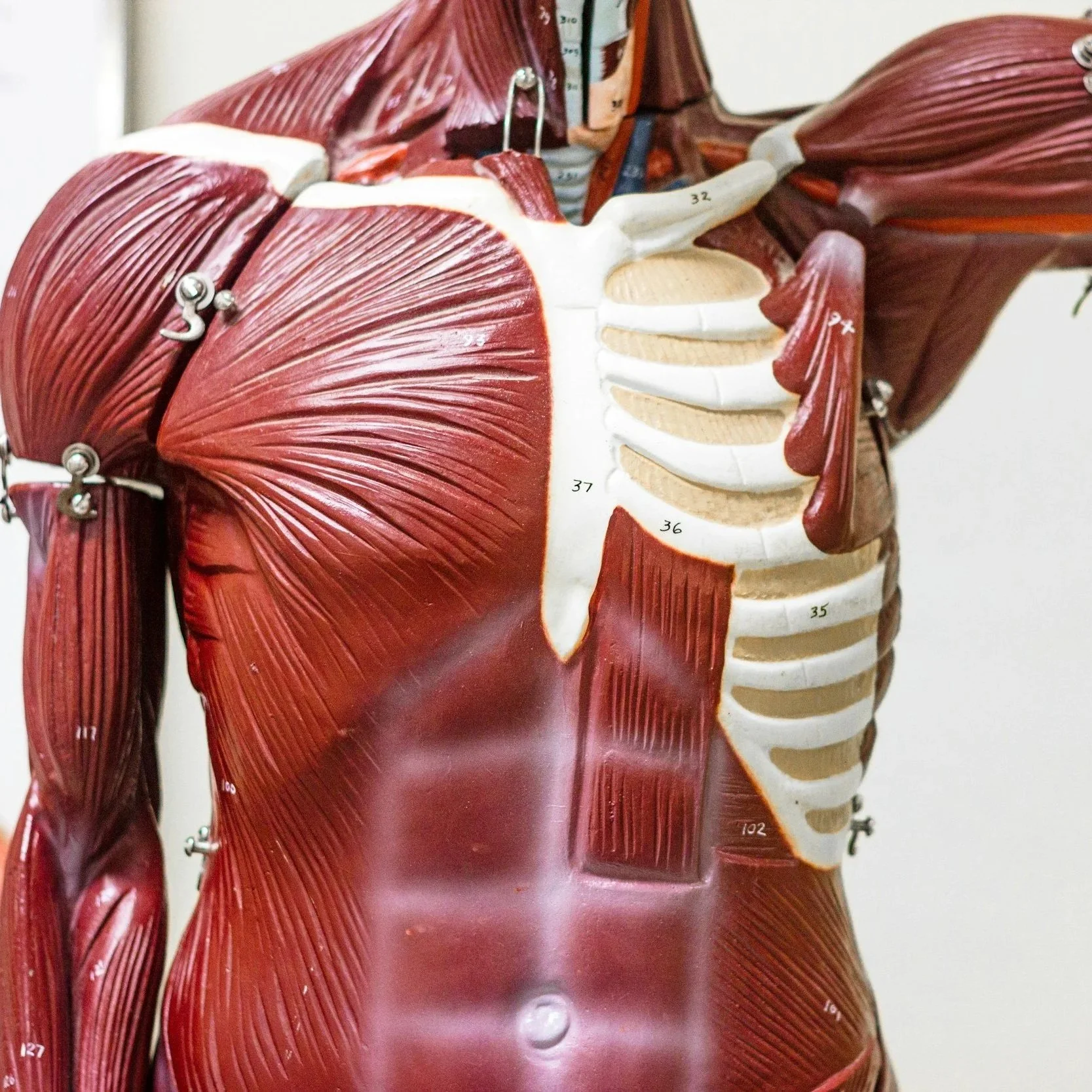
Your muscles are made up of different fiber types, each with its own role in training:
Type I (slow-twitch)
Durable and oxygen-efficient. Perfect for long, low-intensity sessions.Type IIa (fast oxidative glycolytic)
A hybrid type that performs well at moderate to high intensity.Type IIb/x (fast-twitch)
Very fast and powerful, but fatigues quickly. Mainly active during short, explosive efforts such as VO₂max or sprint intervals.
Polarized training takes full advantage of these differences: low-intensity work primarily strengthens Type I fibers, while high-intensity efforts stimulate Type II fibers.

PGC-1α – The Science Behind the Polarized Training Model
PGC-1α is a protein in your muscles that acts like a “switch” for energy production and muscular endurance. It regulates how your muscles adapt to training, especially in endurance sports.
What it does:
More mitochondria (mitochondrial biogenesis): The “power plants” of your cells. More mitochondria means your muscles can use energy more efficiently, allowing you to exercise longer without fatigue.
Improved fat metabolism: PGC-1α stimulates your muscles to use more fat as fuel during exercise, conserving glycogen (sugar) and providing longer-lasting energy.
Adaptation to different training stimuli: Low-intensity training activates the AMPK pathway, while high-intensity training activates the CaMK pathway. By distributing training correctly across zones, you maximize muscular adaptation. Studies show that roughly 80% low intensity and 20% high intensity for AMPK vs. CaMK often yields the best results, forming the basis of the polarized training model.
Muscle protection and recovery: PGC-1α also supports recovery and helps prevent muscle decline under heavy load or as you age.
info@De8020Coach.nl
KvK nr:
Btw nr: